ISO 9001:2000
TL;DR: Die buildup in PVC profile extrusion is often linked to how well the filler mixes into the compound. To judge a calcium carbonate filler, check its surface treatment, how uniform the coating is from lot to lot, its particle size consistency and how reliably it is supplied. Chemical & Mineral Industries Pvt. Ltd. (CMIPL) makes surface-modified activated calcium carbonate (ACC) in five Vical grades at its own kilns in Boranada, Jodhpur.
Why die buildup happens in PVC profile extrusion
Die buildup is material that collects at the die lip or inside the die and then breaks away onto the profile, leaving marks, streaks or a dull surface. Operators then stop the line to clean the die, which costs production time.
Many things can contribute: stabilizer and lubricant balance, melt temperature, moisture and the mineral filler. This page covers the filler part only. Plain calcium carbonate is water-loving, while PVC resin and its plasticizers are not, so it tends to clump. Clumps can raise processing torque and spoil the surface of the finished profile.
How to evaluate a mineral filler for profile compounds
Surface treatment: ask what the particles are coated with and whether the coating is meant for PVC.
Uniform coating: the same treatment on every lot, so the compound behaves the same from one batch to the next.
Particle size: a consistent size, so there are no oversized particles to scratch or catch on the die.
Moisture: a dry filler, because water in the compound can cause voids and surface defects.
Supply continuity: a producer that can keep an extrusion line running without forcing a change of grade.
Ask any supplier for a technical data sheet covering these points for the exact grade, then run a trial on your own line and watch how long it runs between die cleanings.
How surface-modified ACC mixes into PVC
Surface-modified ACC is made to be compatible with the polymer, which helps the filler spread evenly through the melt instead of forming lumps. CMIPL makes ACC by coating precipitated calcium carbonate (PCC) slurry with a fatty acid (stearic acid) and a titanate coupling agent. The coated slurry is then filtered and dried to ACC powder. Particle size and crystal form are controlled by temperature, the concentration of reactants and time.
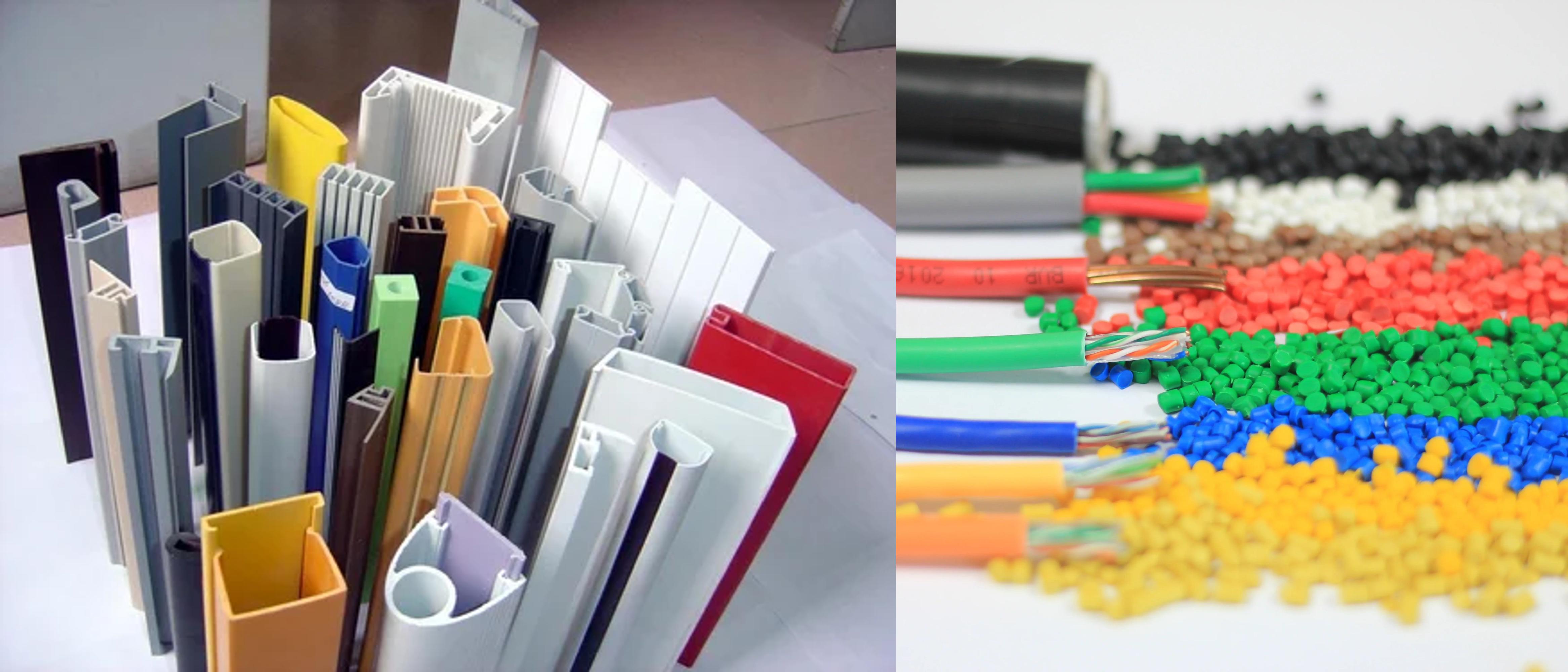
CMIPL's ACC is used as a filler in PVC compounds, cables and profiles for smooth extrusion, better surface finish, gloss, tensile strength and durability. See the PVC compound, cables and profiles page.
CMIPL's Vical ACC grades
CMIPL makes ACC in five Vical grades: Vical-S, Vical-S1, Vical-SF, Vical-C and Vical-T. They are used in PVC, plastics, sealants, adhesives, paints and printing inks. Tell the CMIPL team about your profile formulation, extruder and filler loading, and they will help you choose the grade. See the ACC product page.
Supply and quality
CMIPL operates three lime kilns in Boranada, Jodhpur, with a combined capacity of 1,200 TPD, and makes the quick lime and CO2 that its calcium carbonate products start from. It was the first PCC company certified under ISO 9001:2008 and is ZED Certified by the Ministry of MSME of India.
Frequently asked questions
What causes die buildup in PVC profile extrusion?
Several things, including stabilizer and lubricant balance, melt temperature, moisture and the filler. A filler that clumps or is unevenly coated can add to the problem, so it is worth checking along with the rest of the formulation.
What should I ask a calcium carbonate supplier about surface treatment?
Ask what the coating is, whether it is meant for PVC, whether it is the same on every lot, and for a technical data sheet for the exact grade.
What coating does CMIPL use on its ACC?
CMIPL coats PCC slurry with a fatty acid (stearic acid) and a titanate coupling agent, then filters and dries it to ACC powder.
Which CMIPL grades are used in PVC profiles?
CMIPL makes five Vical ACC grades: Vical-S, Vical-S1, Vical-SF, Vical-C and Vical-T. Share your formulation, extruder and filler loading and the team will help you choose.
Will ACC remove die buildup completely?
No filler can promise that. Buildup depends on the whole compound and process, so test any grade on your own line.
How do I order?
Pricing is quoted per order, based on specification and volume. Contact CMIPL with your formulation and monthly volume.
How to order
Contact the CMIPL team with your profile formulation, filler loading and monthly volume to discuss the right Vical grade and supply schedule.