ISO 9001:2000
TL;DR: Activated calcium carbonate for PVC is a functional, surface-modified mineral filler engineered to improve processing efficiency and mechanical performance in polymer compounding. Manufactured by coating ultrafine precipitated calcium carbonate slurry with fatty acids such as stearic acid and titanate coupling agents, it transforms hydrophilic mineral particles into hydrophobic additives that disperse evenly within PVC matrices. Industrial processors use it to boost tensile strength, impact resistance, and surface gloss across rigid pipes, profiles, and flexible compounds.
What is activated calcium carbonate for PVC compounding?
In polymer manufacturing, mineral fillers are necessary for cost control and dimensional stability. However, standard mineral carbonates exhibit hydrophilic surface properties that resist uniform dispersion within hydrophobic synthetic resins like polyvinyl chloride. Activated calcium carbonate for PVC resolves this chemical mismatch through chemical surface modification. During synthesis, precipitated calcium carbonate slurry is surface-coated with organic compounds—specifically fatty acids like stearic acid and titanate coupling agents. This treatment alters the surface energy of individual crystalline particles, rendering them hydrophobic and organophilic.
When blended during polymer compounding, activated calcium carbonate achieves complete wet-out and dispersion throughout the polymer melt. Rather than clumping into agglomerates that introduce structural weak points, the coated particles distribute evenly through the formulation. The particle size and crystal structure are controlled through temperature, concentration of reactants, and reaction time during production. The resulting powder integrates into both rigid PVC and plasticized polymer compounds, reinforcing mechanical integrity and delivering stable melt behavior during high-shear operations.
How fatty acid surface modification enhances PVC compatibility
The primary operational hurdle in PVC compounding is the incompatibility between polar mineral surfaces and non-polar or moderately polar polymer chains. Uncoated calcium carbonate contains polar hydroxyl groups on its mineral boundary, promoting filler-filler attraction and particle agglomeration. Applying a fatty acid monolayer such as stearic acid introduces long hydrocarbon tails that point outward from the mineral core. These organic tails create steric hindrance, preventing particle agglomeration while establishing strong interfacial interaction with surrounding polymer chains.
This coupling mechanism lets compounds made with ACC for PVC compound, cables and profiles flow smoothly through blending equipment. The organic coating acts as an internal lubricant during the initial stages of compounding, lowering interfacial friction and accelerating the fusion of resin particles. Consequently, processors achieve homogenous batches without excessive thermal breakdown or localized hot spots. This surface engineering prevents the formation of unmixed filler pockets, which are the main cause of pinholes and cosmetic defects in extruded goods.
Mechanical benefits: impact resistance in finished parts
When functional mineral fillers integrate into polyvinyl chloride, they serve as active reinforcing agents rather than inert space occupiers. The uniform dispersion of surface-modified precipitated particles distributes mechanical stress across the finished component. In rigid applications, micro-cracks that meet well-bonded calcium carbonate particles are arrested, dissipating impact energy through localized matrix yielding. This mechanism delivers marked improvement in impact strength, reducing field failures caused by handling, transport, or low-temperature exposure.
Extrusion benefits: lower melt torque and less equipment wear
Processing efficiency defines the commercial margins of extrusion and injection molding lines. Activated calcium carbonate delivers noticeable rheological advantages within the processing barrel. Because the organic coating acts as an internal processing aid, compounds exhibit optimized fusion rates, reduced melt torque, and lower head pressure during extrusion. Lower friction lowers abrasive wear on extruder screws, barrels, and calibration dies, reducing machine maintenance and downtime across high-volume production cycles.
Performance of activated calcium carbonate in rigid pipes and profiles
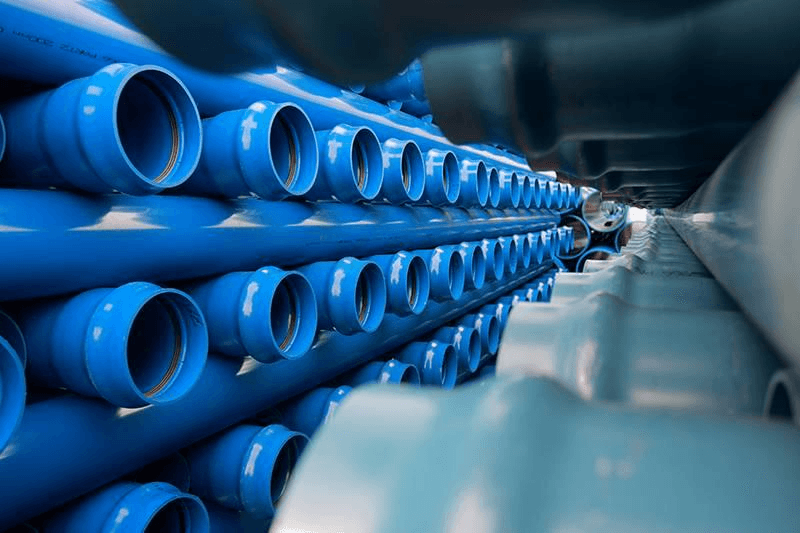
Rigid PVC pipe and profile extruders require a balance between high mineral loading and structural performance. In rigid conduit and pipe extrusion, ACC serves as a critical functional filler. It promotes smooth extrusion, better surface finish, gloss, tensile strength, elongation, and marked improvement of impact strength. It also improves the durability and heat resistance of the finished pipe or profile.
Comparing activated calcium carbonate with uncoated calcium carbonate
Formulators must evaluate the functional differences between surface-treated activated calcium carbonate and conventional uncoated mineral fillers such as ground calcium carbonate (GCC) or uncoated precipitated calcium carbonate (PCC). The table below outlines how surface modification influences processing behavior and finished product properties in PVC formulations.
Property / Parameter | Activated Calcium Carbonate (ACC) | Uncoated Calcium Carbonate (GCC / PCC) |
|---|---|---|
Surface Nature | Hydrophobic, organophilic (stearic acid/titanate coated) | Hydrophilic, polar (untreated mineral surface) |
Resin Compatibility | High compatibility; rapid wetting and dispersion | Low compatibility; prone to particle agglomeration |
Extrusion Torque | Reduced melt torque due to internal lubrication | Higher melt torque; increased internal shear heating |
Impact Strength | Substantially improved via crack-arresting mechanisms | Often reduced at higher filler loadings due to void creation |
Die & Screw Wear | Lower; the coating reduces internal friction | Higher; poorly dispersed particles add friction |
Finished Surface Quality | Smooth, high gloss, defect-free profile surfaces | Lower gloss; potential pinholes or micro-roughness |
Functional Role | Reinforcing processing modifier and filler | Predominantly bulk volumetric extender |
How CMIPL makes its calcium carbonate
Chemical & Mineral Industries Pvt. Ltd. (CMIPL), founded in 1967 in Jodhpur, India, converts limestone into Quick Lime (CaO), Precipitated Calcium Carbonate (PCC) and Activated Calcium Carbonate (ACC), with three lime kilns of 1200 TPD combined capacity. Carbon dioxide from limestone calcination is captured and reused to precipitate the calcium carbonate that ACC is made from. Buyers can see how CMIPL makes lime and calcium products, from limestone to finished grades.
CMIPL ACC product grades and industrial procurement
CMIPL manufactures a dedicated portfolio of Activated Calcium Carbonate grades developed for compatibility across PVC and related polymer applications. Our ACC product line includes Vical-S, Vical-S1, Vical-SF, Vical-C, and Vical-T. Each grade is manufactured with controlled crystal morphology, precise reactant timing, and surface modification to serve specific processing requirements across rigid PVC pipes, technical profiles, polymer masterbatches, adhesives, sealants, paints, printing inks, and rubber compounding.
Frequently asked questions
Why is activated calcium carbonate preferred over uncoated calcium carbonate in PVC?
Activated calcium carbonate features an organic surface coating that alters its natural hydrophilic surface to hydrophobic. This chemical treatment enables thorough wetting and dispersion within PVC resin, avoiding the particle agglomeration, internal voids, and brittle structural failures typical of uncoated mineral fillers.
How does stearic acid coating improve filler dispersion in PVC resins?
Stearic acid molecules anchor chemically to the calcium carbonate crystal surface while extending non-polar hydrocarbon tails outward into the formulation. This organic barrier reduces particle-to-particle attraction and lowers interfacial tension, allowing individual filler particles to separate and disperse smoothly throughout the polymer melt under standard compounding shear.
What role does ACC play in improving the impact strength of rigid PVC pipes?
Because ACC particles are ultrafine and fully dispersed, they integrate tightly into the PVC matrix without creating stress-concentrating micro-voids. When subjected to physical shock, the well-bonded particles dissipate impact energy and arrest crack propagation, resulting in higher impact strength in rigid PVC pipes.
How does ACC affect extruder wear and melt flow during PVC processing?
The fatty acid coating on ACC acts as an internal processing aid that reduces melt viscosity, head pressure, and extrusion torque. By lowering internal friction during processing, ACC reduces mechanical abrasion on extruder screws, barrels, and calibration dies, prolonging processing equipment life.
How does activated calcium carbonate improve the surface gloss and finish of PVC profiles?
ACC particles are synthetically precipitated to ensure uniform particle size and crystal structure, eliminating coarse mineral grit. Combined with uniform resin dispersion, this consistency ensures smooth melt flow at the die exit, preventing surface roughness and delivering a smooth, high-gloss finish on extruded profiles.
Which specific ACC grades does CMIPL manufacture for polymer processors?
CMIPL manufactures five primary Activated Calcium Carbonate grades: Vical-S, Vical-S1, Vical-SF, Vical-C, and Vical-T. These grades are surface-modified with fatty acids and titanate coupling agents to meet diverse processing requirements across PVC pipes, profiles, cables, adhesives, and rubber compounds.
What is the typical addition level of ACC in rigid versus flexible PVC compounds?
In general industrial practice, loading levels vary widely depending on the target mechanical specifications, resin type, and wall thickness of the finished part. Rigid applications often incorporate lower to moderate loadings to preserve high impact resistance, while flexible compounds may utilize higher filler ratios; processors should consult their compound formulation guidelines to determine ideal addition rates.
How can industrial buyers request pricing and supply details for CMIPL ACC?
Commercial pricing and supply arrangements are provided upon inquiry based on specific grade selection, order volume, and delivery requirements. Buyers can contact CMIPL through the website with the grade, monthly volume and delivery location.
Contact CMIPL to discuss your PVC compound requirements and receive detailed product specifications for our activated calcium carbonate grades.