ISO 9001:2000
TL;DR: Activated calcium carbonate for PVC compounding provides surface-modified mineral reinforcement that integrates cleanly into rigid and flexible polyvinyl chloride matrices. By treating precipitated calcium carbonate with fatty acids such as stearic acid and titanate coupling agents, the mineral shifts from hydrophilic to hydrophobic, improving dispersion, lowering melt viscosity, and raising impact strength. Chemical & Mineral Industries Private Limited manufactures surface-treated calcium carbonate grades designed for PVC pipes, profiles, and cable compounds.
Role of Activated Calcium Carbonate for PVC Compounding
In polymer processing, unprocessed mineral fillers often create dispersion challenges due to incompatibility between hydrophilic mineral surfaces and organic PVC resin. Activated calcium carbonate for PVC compounding solves this interfacial tension through dedicated chemical surface treatment. At Chemical & Mineral Industries Private Limited, we manufacture activated calcium carbonate by coating precipitated calcium carbonate slurry with organic fatty acids, primarily stearic acid, alongside titanate coupling agents. This treatment creates an organic monolayer over each crystalline particle.
When incorporated into PVC compound formulation, cable insulation, and profile extrusion lines, this modified mineral functions as more than an inert extender. It actively improves polymer matrix cohesion, ensuring uniform fusion during dry blending and melt processing. Extensively used in rigid and flexible PVC formulations, our surface-coated grades help processors achieve smooth extrusion, better surface finish, enhanced gloss, tensile strength, and long-term durability. Incorporating functional mineral fillers reduces resin consumption while maintaining dimensional stability across finished plastic goods.
Surface Modification Chemistry and Polymer Compatibility
The core technical distinction between untreated ground limestone and activated precipitated carbonate lies in interfacial surface chemistry. Natural calcium carbonate exhibits high surface energy and natural hydrophilicity, causing fine particles to agglomerate when mixed into non-polar or moderately polar polymers. Agglomerates act as stress concentration points in extruded profiles or molded fittings, causing premature mechanical failure under mechanical loads.
Our chemical treatment process coats precipitated calcium carbonate slurry with stearic acid and titanate coupling agents before filtering and drying. The carboxyl groups of the fatty acid bond chemically to the calcium sites on the mineral crystal surface, orienting the hydrophobic aliphatic hydrocarbon tails outward toward the polymer matrix. This hydrophobic exterior dramatically lowers surface tension between the mineral and the polyvinyl chloride chains. As a result, the filler wets out quickly during compounding, prevents agglomeration, and promotes homogeneous distribution throughout the melt.
Processing Advantages: Extruder Torque and Melt Flow
Incorporating functional minerals into PVC formulations directly influences compound rheology and equipment performance. Standard uncoated fillers often increase melt viscosity, driving up motor load, extruder torque, and barrel temperatures. In contrast, the organic surface layer on activated calcium carbonate for PVC acts as an internal lubricant during the gelation and plasticization phases.
Because the stearic coating reduces internal friction between polymer chains and mineral particles, compounders observe lowered head pressure and stable torque during twin-screw and single-screw extrusion. The lubricated particle surfaces also decrease abrasive wear on barrels, screw flights, and shaping dies. For processors operating high-speed profile lines or thin-walled conduit extrusion, these rheological benefits translate into smoother melt delivery, reduced risk of melt fracture, and consistent wall thickness across complex cross-sections.
Mechanical Performance: Impact Strength, Elongation, and Gloss
Mineral selection directly influences the final physical properties of rigid and flexible PVC articles. In rigid PVC applications such as window profiles, electrical trunking, and pressure pipes, activated precipitated calcium carbonate acts as an impact modifier synergist. Because the ultrafine particles disperse homogeneously without forming micro-voids, they absorb and dissipate mechanical energy, raising falling dart and notched Izod impact resistance.
In addition to impact toughness, our activated grades improve tensile strength, elongation at break, and thermal resistance in finished profiles. Uncoated fillers frequently leave a dull, matte exterior prone to surface chalking and roughness. The uniform dispersion of coated precipitated particles produces high surface gloss, crisp edges, and a smooth cosmetic finish. This visual consistency is critical for architectural profiles, commercial trim, and consumer-facing plastic conduits that require uniform appearance without secondary finishing.
Formulation Across Rigid PVC Pipes, Profiles, and Cable Compounds
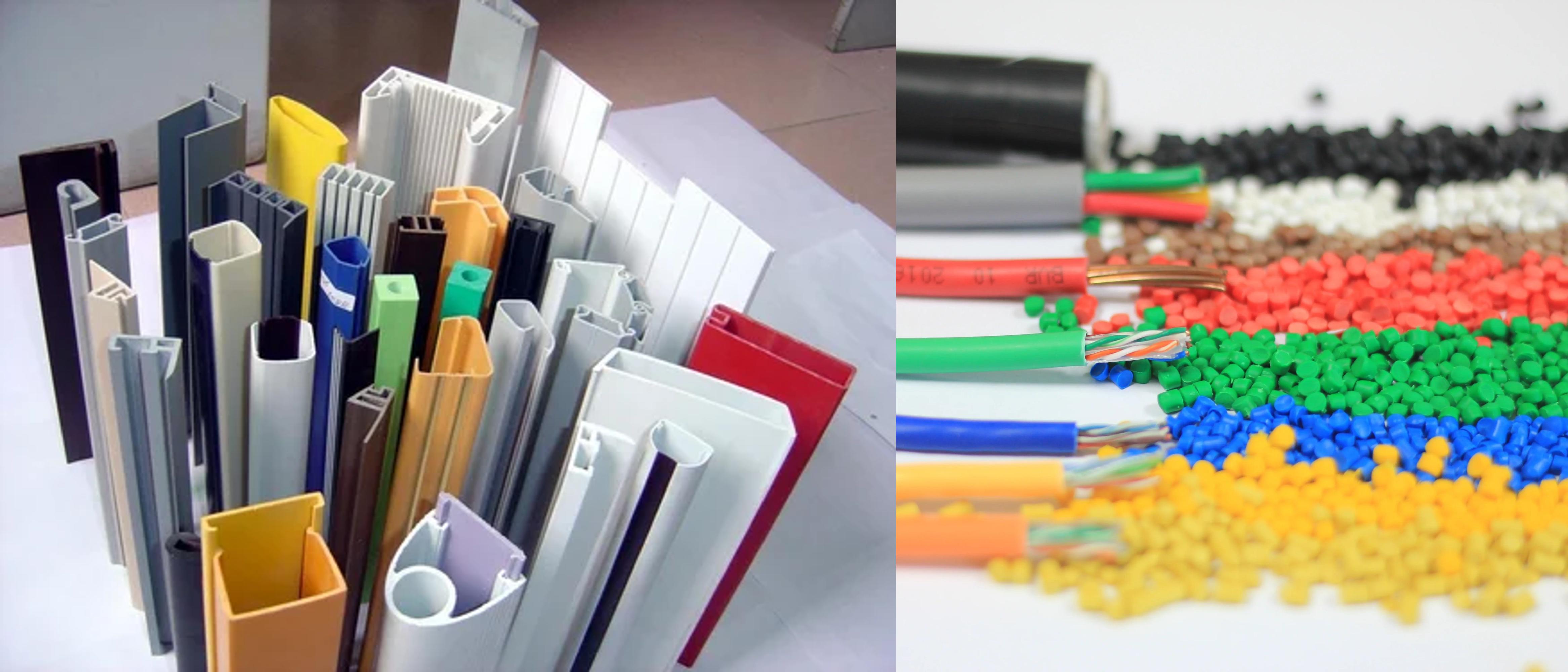
PVC formulations vary widely based on end-use demands, spanning rigid high-modulus structures to flexible, plasticized sheathing. In rigid PVC pipes and conduit, functional fillers provide dimensional rigidity, flexural modulus, and smooth internal bore surfaces that reduce fluid drag. Formulators typically adjust loading levels based on pressure ratings and pipe wall standards, ensuring mechanical compliance without compromising extrusion speed.
In flexible PVC compound formulations, such as electrical wire insulation and cable jacketing, activated minerals deliver distinct operational benefits. The hydrophobic coating limits plasticizer absorption, preventing the filler from drawing plasticizer away from the resin matrix. This preserves compound flexibility, elongation, and cold-bend performance. Beyond PVC, we provide mineral solutions including calcium carbonate for rubber and activated calcium carbonate for adhesives and sealants to fulfill specialized industrial compounding needs.
Technical Specifications: Particle Control and Crystal Morphology
Achieving consistent compounding results requires precise control over raw material physical parameters. In our manufacturing process, calcium carbonate crystal growth and particle morphology are governed by reaction temperature, concentration of reactants, and precipitation time. Controlling these variables yields fine crystalline structures with tight particle size distributions, avoiding oversized particles that cause pinholes in thin profiles or wire jacketing.
Technical Parameter | Industrial Function in PVC Compounding |
|---|---|
Crystal Form | Governed by precipitation controls to deliver uniform crystalline shapes. |
Surface Treatment | Stearic acid and titanate coupling agent coating that makes the surface hydrophobic. |
Dispersibility | Eliminates dry blend clustering and enables rapid wetting in PVC resin. |
Moisture Content | Low moisture helps prevent porosity during extrusion; ask for the figure on the certificate of analysis. |
Whiteness & Purity | Brightness supports clean colour in white and light compounds; ask for the whiteness value per grade. |
Frequently asked questions
Why is activated calcium carbonate used instead of uncoated calcium carbonate in PVC compounding?
Uncoated calcium carbonate is naturally hydrophilic and tends to form agglomerates within hydrophobic PVC resins, which reduces impact resistance and increases melt viscosity. Activated calcium carbonate features an organic fatty acid coating that renders the particle surface hydrophobic, ensuring complete dispersion, lower extruder torque, and superior mechanical properties.
How does stearic acid surface treatment improve mineral dispersion?
During surface modification, the polar carboxyl end of the stearic acid molecules chemically bonds to calcium ions on the crystal surface, leaving the non-polar hydrocarbon chains facing outward. These hydrocarbon chains interact compatibly with PVC polymer chains, eliminating agglomeration and allowing individual mineral crystals to wet out rapidly during high-speed blending.
What impact does activated calcium carbonate have on extruder torque and processing speed?
The surface coating functions as an interfacial lubricant, reducing frictional shear between the polymer melt and processing metal surfaces. This effect lowers head pressure and extruder motor torque, allowing compounding lines to maintain higher throughput and stable extrusion rates without causing excessive melt temperatures.
What grades of activated calcium carbonate does CMIPL produce?
Chemical & Mineral Industries Private Limited manufactures several dedicated activated grades, including Vical-S, Vical-S1, Vical-SF, Vical-C, and Vical-T. Each grade is produced through controlled precipitation and surface modification to serve specific needs across PVC compounds, profiles, pipes, adhesives, and rubber goods.
Does activated calcium carbonate reduce plasticizer absorption in flexible PVC compounds?
Yes, treating precipitated calcium carbonate with organic coating agents significantly lowers the mineral's free surface porosity and oil absorption value. In flexible formulations like cable jacketing, this prevents the mineral filler from absorbing active plasticizers, maintaining compound flexibility and reducing overall formulation costs.
How does activated calcium carbonate improve impact strength in rigid PVC?
Because ultrafine activated particles disperse uniformly without forming large agglomerates, they create a cohesive network within the PVC matrix. Under mechanical shock, these well-bonded particles promote localized shear yielding and arrest crack propagation, resulting in improved falling weight and notched impact resistance.
How is commercial pricing determined for bulk mineral shipments from CMIPL?
Commercial pricing at Chemical & Mineral Industries Private Limited is not listed publicly as pricing is quoted per order based on volume, delivery, and specification requirements. Industrial buyers should reach out directly with their grade preferences and delivery schedules to receive a formal quotation.
Contact Chemical & Mineral Industries Private Limited to specify your grade requirements and receive a commercial quotation for your PVC compounding operations.