ISO 9001:2000
TL;DR: In the agriculture industry, lime serves as an essential chemical conditioning agent to neutralize acidic soils, restore soil fertility, and supply essential calcium and magnesium for crop production and livestock feed formulations. Chemical & Mineral Industries Private Limited (CMIPL) manufactures industrial-grade Quick Lime in tailored particle fractions, ranging from 25-75 mm lumps down to 300 Mesh fine powder, designed to support agribusiness distributors, fertilizer formulators, and commercial farm operations seeking consistent chemical reactivity and high-purity calcium oxide.
The Role of Quick Lime in the Modern Agriculture Industry
Across commercial farming and crop management, the agriculture industry faces mounting pressure to maximize arable yield per hectare while maintaining long-term soil health. Sustained use of nitrogenous fertilizers, continuous intensive cropping, and natural leaching from heavy rainfall gradually deplete basic cations from arable soils. This depletion elevates hydrogen and aluminum concentrations, driving soil pH into acidic ranges that restrict root development and induce mineral deficiencies. To counteract these challenges, agricultural chemical formulators and commercial farm operators depend on reactive calcium oxide (Quick Lime) to execute rapid, controlled pH elevation.
Quick Lime improves soil fertility by neutralizing exchangeable soil acidity faster and more efficiently per ton than uncalcined agricultural limestone. When applied to agricultural land, calcium oxide reacts with moisture to release hydroxide ions, converting phytotoxic soluble aluminum into insoluble aluminum hydroxide complexes. Concurrently, the addition of calcium enriches the soil's cation exchange complex, flocculating clay minerals to enhance soil aeration, water infiltration, and structural tilth. Beyond direct field application, the agriculture industry relies on calcium compounds to balance animal nutrition mixes, supply supplemental calcium for skeletal growth, and condition agricultural wastewater and livestock bedding. Sourcing consistent, high-reactivity quick lime ensures that agricultural distributors and chemical blenders deliver dependable chemical efficacy to growers facing challenging soil environments.
Soil Acidity Correction and Nutrient Bioavailability
Managing soil acidity is fundamental to unlocking the economic return on agricultural fertilizers. When soil pH drops below optimal thresholds, applied macro-elements such as phosphorus become chemically fixed to insoluble iron and aluminum complexes, leaving crops starved of accessible nutrition despite expensive fertilization programs. Furthermore, biological activity in low-pH soils stalls, as nitrifying bacteria and beneficial soil microbes cannot thrive in strongly acidic soil solutions. Applying quick lime provides rapid remedial action by neutralizing active and reserve acidity throughout the rhizosphere.
The chemical neutralization capacity of quick lime is exceptionally high, which means that significantly lower tonnages are required to shift soil pH compared to raw carbonate rock. As calcium oxide reacts with moisture and carbonic acid in the soil solution, it neutralizes acid ions and raises the root zone pH into the optimal range between 6.0 and 7.0. Within this biological window, phosphorus availability reaches its peak, micronutrient toxicities subside, and microbial mineralization of organic matter proceeds unimpeded. Additionally, the calcium delivered directly strengthens plant cell wall architecture, improving crop resistance to moisture stress and fungal pathogens. Agricultural blenders routinely incorporate calcined lime into customized soil amendments to deliver simultaneous pH remediation and essential plant nutrition across crop rotations.
Mesh Sizing and Reactivity Specifications for Soil Conditioning
The agricultural efficacy of quick lime depends heavily on particle size distribution and chemical reactivity. Sizing determines both the physical mechanics of spreading and the velocity at which the calcium oxide slakes upon contact with field moisture. Coarser grades, such as 5-25 mm and 25-75 mm lump lime, are generally procured by centralized fertilizer manufacturing facilities, chemical blenders, or industrial agricultural processors equipped with specialized milling and hydration circuits. These facilities grind or slake the raw material into uniform dry blends or liquid suspensions designed for downstream farm distribution.
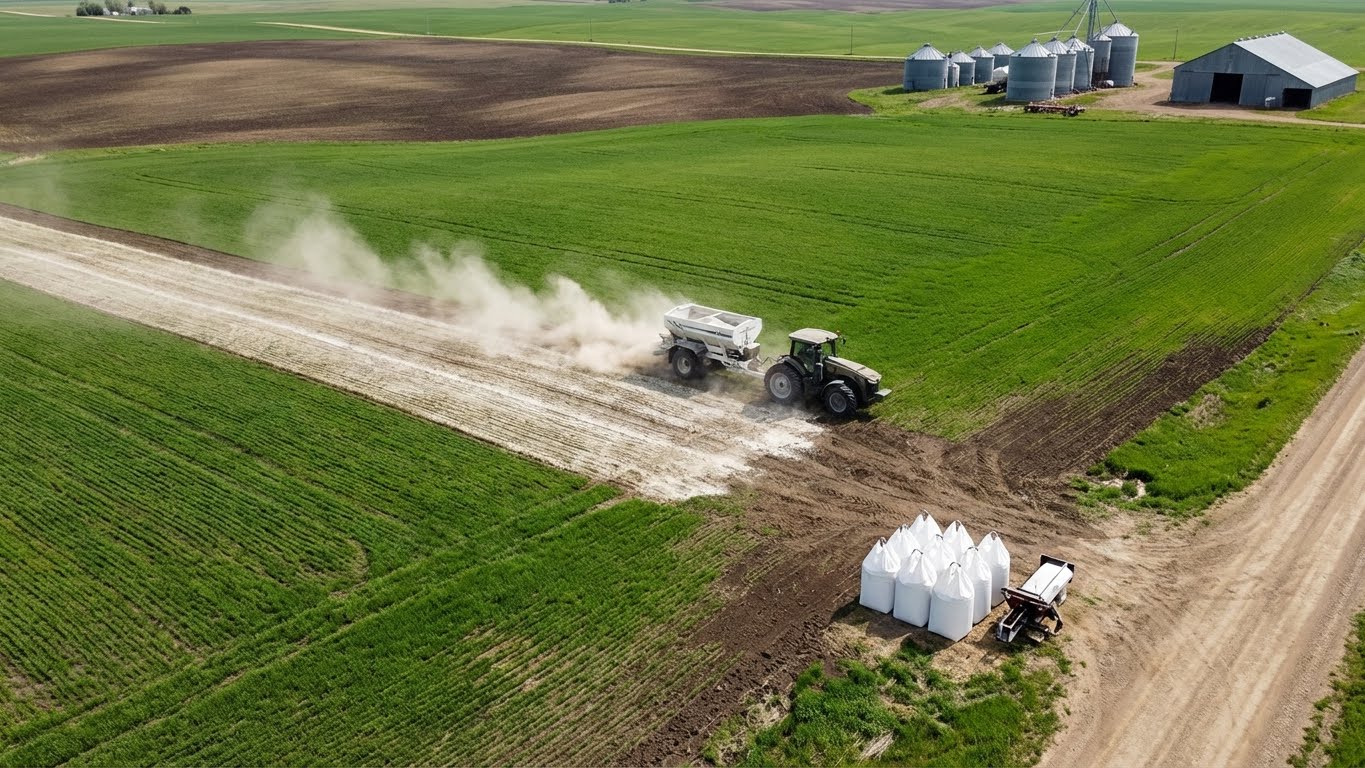
For direct soil conditioning, mechanical broadcast spreading, and localized farm blending, finely graded fractions provide superior surface area contact with soil aggregates. Powder fractions ranging from 0-3 mm up to dedicated 200 Mesh and 300 Mesh grades slake almost instantaneously when incorporated into moist soil beds, delivering immediate neutralization throughout the topsoil layer. However, fine powders require calibrated pneumatic application equipment or pelletizing pre-treatments to minimize wind drift and worker inhalation risks during transport and field application. Evaluating product mesh sizing against application timelines, equipment capabilities, and regional humidity ensures that agricultural operators achieve maximum soil neutralization without excessive dusting losses or unreacted aggregate residues.
Agricultural Quick Lime in Animal Feed and Livestock Management
In addition to soil management, the agriculture industry incorporates calcium minerals into livestock feed and farm sanitation regimens. Animal nutrition formulators require bioavailable mineral sources to meet the daily dietary requirements of poultry, dairy cattle, and swine. Calcium is the dominant mineral required for structural skeletal development, blood coagulation, muscle contraction, and sustained eggshell formation in laying hens. When processed under controlled industrial protocols, quick lime serves as an upstream chemical intermediate for synthesizing high-purity dietary calcium supplements and animal feed additives that balance dietary cation-anion differences.
On livestock farms, dairy facilities, and poultry houses, quick lime also serves an indispensable bio-sanitation function. Livestock managers routinely dress barns, poultry litter, and holding pens with controlled amounts of lime to control ammonia emissions, suppress bacterial odors, and absorb excess bedding moisture. This surface desiccation helps reduce foot rot and environmental mastitis in dairy herds, improving animal welfare and farm biosecurity while mitigating insect vector propagation across intensive agricultural production sites.
Procurement, Storage, and Handling Guidelines for Agricultural Quick Lime
Because quick lime is an active, unslaked chemical compound consisting primarily of calcium oxide (CaO), procurement and farm-level handling require careful logistical controls. Calcium oxide is highly hygroscopic and reacts exothermically with atmospheric moisture, standing water, or rain. When exposed to water, quick lime slakes violently, releasing significant thermal energy that can ignite nearby combustible packaging or generate high-pressure steam if confined in unvented vessels. Consequently, agricultural distributors and end users must maintain dedicated storage silos or hermetically sealed, moisture-proof multi-ply packaging to prevent premature degradation and caking during transport and off-season storage.
Handling protocols must prioritize operational safety across every stage of agricultural unloading, blending, and spreading. Workers handling powdered quick lime must wear personal protective equipment, including sealed safety goggles, full-face respirators, dust-resistant coveralls, and chemical-resistant gloves, to prevent ocular irritation, skin burns, or respiratory inflammation caused by alkaline dust. Field application should be timed to avoid high-wind conditions, ensuring uniform dispersion across soil beds while preventing drift onto adjacent non-target crops or neighboring properties. When slaking quick lime on site for agricultural liquid suspensions or pathogen control washes, facilities must use specialized hydration tanks designed to dissipate the resulting thermal release safely.
CMIPL Quick Lime Manufacturing and Supply
Chemical & Mineral Industries Private Limited manufactures and exports Quick Lime from natural limestone for agricultural formulators, fertilizer blenders, and livestock operators. It operates three lime kilns in Jodhpur with a combined production capacity of 1,200 TPD.
CMIPL supplies quick lime across a comprehensive spectrum of physical sizing options, including coarse lumps sized at 25-75 mm and 5-25 mm, intermediate 0-3 mm powder, and ultrafine 200 Mesh and 300 Mesh milled grades. This operational breadth enables agricultural blenders to select the exact surface area, particle sizing, and hydration rate suited to their fertilizer recipes or soil amendment operations. See the quick lime product page.
Frequently asked questions
What is the primary role of quick lime in the agriculture industry?
In agriculture, quick lime is applied to neutralize acidic soils, restore soil fertility, and supply essential calcium and magnesium nutrients. By raising soil pH, it counteracts aluminum toxicity and unlocks soil nutrients like phosphorus for improved crop production.
How does quick lime differ from agricultural limestone for soil conditioning?
Quick lime is calcined calcium oxide, whereas agricultural limestone is uncalcined calcium carbonate. Quick lime reacts far more rapidly with moisture and offers a substantially higher neutralization value per ton, requiring lower application volumes to achieve target pH shifts.
What sizes of quick lime are suitable for agricultural applications?
Agricultural users select sizes based on application equipment and processing needs. Coarser fractions like 5-25 mm and 25-75 mm lumps are used by fertilizer blenders with crushing circuits, while 0-3 mm powder, 200 Mesh, and 300 Mesh grades are preferred for rapid slaking and uniform soil incorporation.
Can quick lime be applied directly to growing crops?
Direct application of unslaked quick lime onto living plant foliage is not recommended because the intense heat released during slaking can cause severe leaf burn. Quick lime should be broadcast and thoroughly incorporated into the soil during pre-planting tillage, allowing it to slake with soil moisture prior to seed sowing.
How should agricultural quick lime be stored on commercial farms?
Quick lime must be kept in clean, weatherproof, and elevated dry storage environments such as sealed silos or moisture-proof bags. Direct contact with moisture or atmospheric humidity causes premature hydration, product degradation, and potentially dangerous heat generation.
How does quick lime support livestock housing and barn sanitation?
Livestock managers dress barns, poultry litter and holding pens with controlled amounts of lime to absorb bedding moisture. This suppresses harmful bacterial growth, dries out manure surfaces, and reduces ammonia odors.
How are quick lime orders priced for agricultural buyers?
CMIPL does not publish fixed public price sheets; pricing is quoted per order based on purchase volume, required mesh specification, and delivery. Buyers can request a quote directly from the CMIPL sales team.
Contact CMIPL today to discuss your technical specifications or receive a quotation for bulk agricultural quick lime.
Last updated: 2026-11-03